
PPF vs. Ceramic Coating: Which Does Your Car Need First?
Marcus DelgadoOwner & Lead InstallerUpdated August 2, 2026
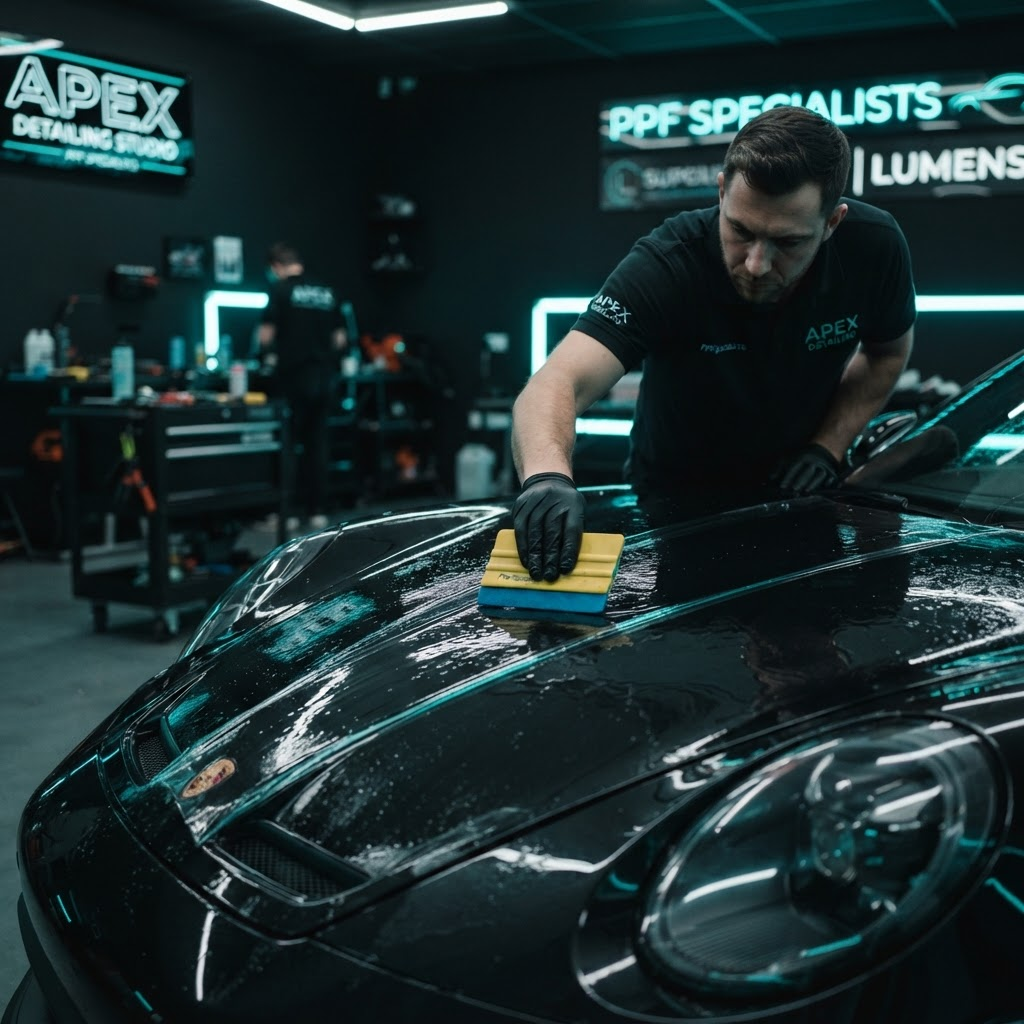
01They are not competitors — they protect against different things
The most common misconception we correct: ceramic coating does not stop rock chips, and PPF is not primarily about gloss or easy washing. They are different materials solving different problems, which is why the “which is better” framing breaks down.
| Paint Protection Film | Ceramic Coating | |
|---|---|---|
| What it is | 8-mil self-healing urethane film | Liquid polymer that bonds to paint |
| Stops rock chips | Yes | No |
| Self-heals scratches | Yes, with heat | No |
| Blocks UV & oxidation | Partially | Yes |
| Hydrophobic (water beading) | Moderate | Excellent |
| Chemical & stain resistance | Good | Excellent |
| Typical warranty | 10 years | 2–9 years by tier |
| Starting price at our shop | $1,999 (partial front) | $800 (2-year) |
02Get PPF first if your miles are highway miles
If you commute on I-4, the 417, or the 528, your front bumper, hood, and mirrors are taking sandblasting hits every week. No chemical coating stops a rock at 70 mph — only a physical barrier does. A full-front PPF package covers the entire impact zone and self-heals the light scratches that washing introduces.
03Get ceramic first if your enemy is the Florida sun
If your car lives outside — apartment parking, office lots — the bigger threat is UV oxidation, bird droppings, lovebug season, and mineral-heavy sprinkler water. Ceramic coating is the right first move: it blocks UV, resists etching, and makes the weekly wash dramatically faster. It is also the cheaper entry point by roughly half.
04The setup we recommend most
For a car you plan to keep: full-front PPF for impact zones, then ceramic coating over the entire vehicle — including on top of the film. The coating adds UV resistance and slickness to the PPF, and the film handles the impacts the coating can’t. Done together, the combo costs less than doing them as separate visits because prep overlaps.
Quick answers
Yes — it’s the recommended combination. Film-safe ceramic coatings add hydrophobic behavior and UV resistance on top of the PPF without affecting its self-healing top coat.
PPF, because it prevents the rock chips and sandblasting that buyers and appraisers dock you for. Ceramic keeps paint looking newer, which helps presentation, but chip-free original paint is the bigger number at trade-in.
Usually only on repainted or restored panels you want to preserve. For a daily driver with existing chips, ceramic coating plus paint correction delivers more visible improvement per dollar.
Related service
Paint Protection Film — from $1,999
Self-healing urethane paint protection film that stops rock chips and scratches, with a 10-year manufacturer warranty.